


Nabila's
Frederick Tang Architecture has designed Nabila’s, an elevated-casual Lebanese restaurant and market on a bustling corner of Court Street in NYC.
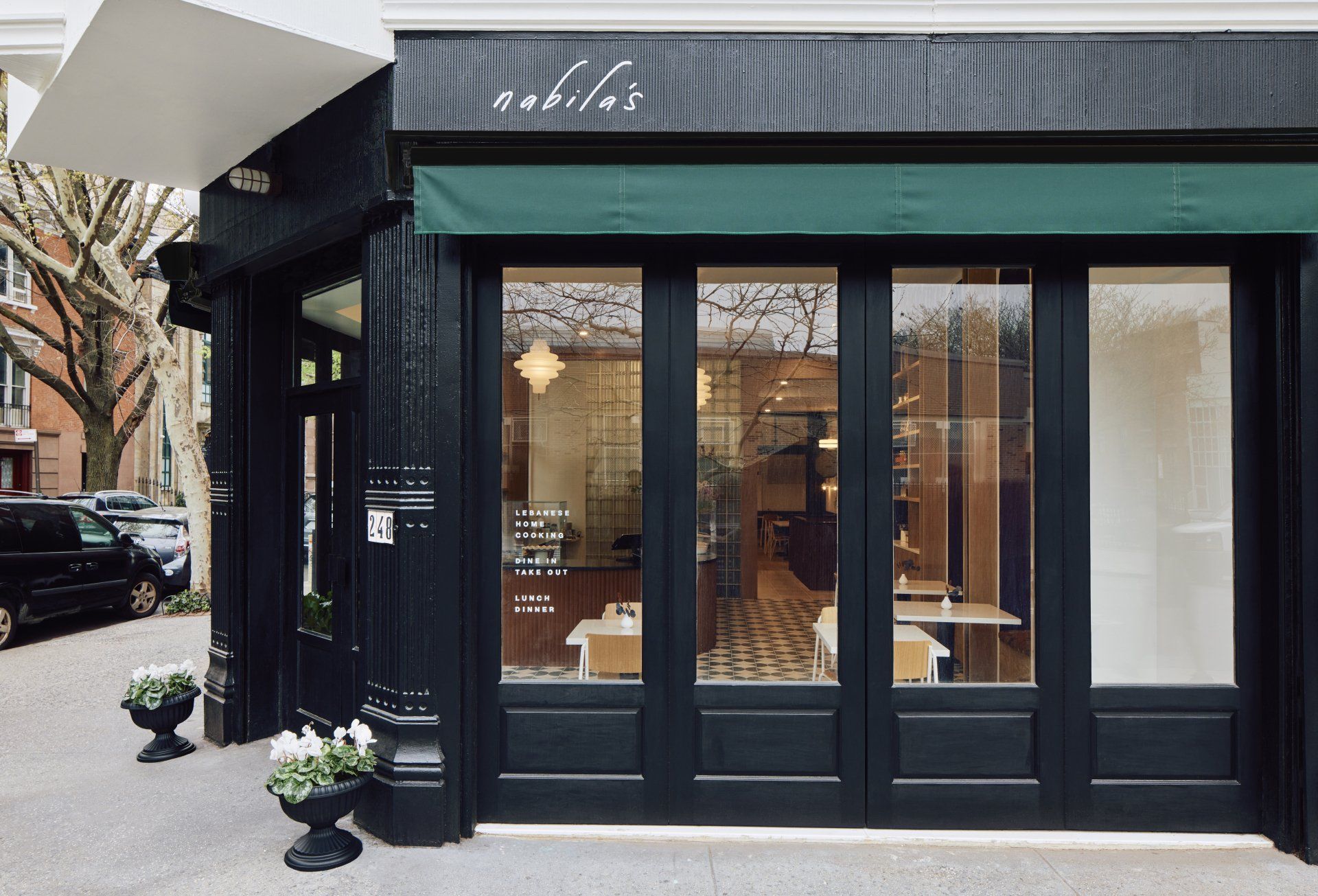
The renovation transforms a formerly dark, segmented tavern into a bright, welcoming space whose curving architectural details, lush material treatments, and rich colors all nod subtly to the Lebanese roots of the owners: a son and his mother, the restaurant’s namesake. At its core, the design evokes the feeling of the mother’s storied dinner parties - lively neighborhood affairs where tables are heaped with an abundance of food.
The opening of Nabila’s marks a long, deeply collaborative design process between FTA and the restaurant’s co-owner Mike Farah, for whom the project is a labor of love. Farah left his job in finance to build the restaurant with his mother, who was born in Lebanon and has a successful catering business in Washington D.C. It was important to Farah that the restaurant be located in Cobble Hill, a diverse Brooklyn neighborhood where he lives with his family. Farah and FTA visited over 20 locations over three years, including a former chinese restaurant, a real estate agency, and a bike shop, before landing on its final home at 248 Court Street, on the corner of Kane.
Nabila’s facade stretches across the ground floor of a Queen-Anne style building, originally built in 1886. While the structure’s upper residential levels are brick, the ground floor facade is clad in wood with ornamental moldings. A rich palette is introduced here, with the facade painted black and forest green awnings that bear the restaurant’s name in custom hand lettering, whose swoops and soft curves reference the design within. Significantly, FTA also designed the branding for Nabila’s, from logo to food packaging.
“Nabila's is a restaurant inspired by my mom's cooking, and has always been a deeply personal project for me. The FTA team recognized and supported this from the outset. I wanted great skill, of course, but I also needed partners I could trust. A team that understood me, knew my priorities and always had my back. I couldn’t imagine doing this with any other studio.”
Says Farah
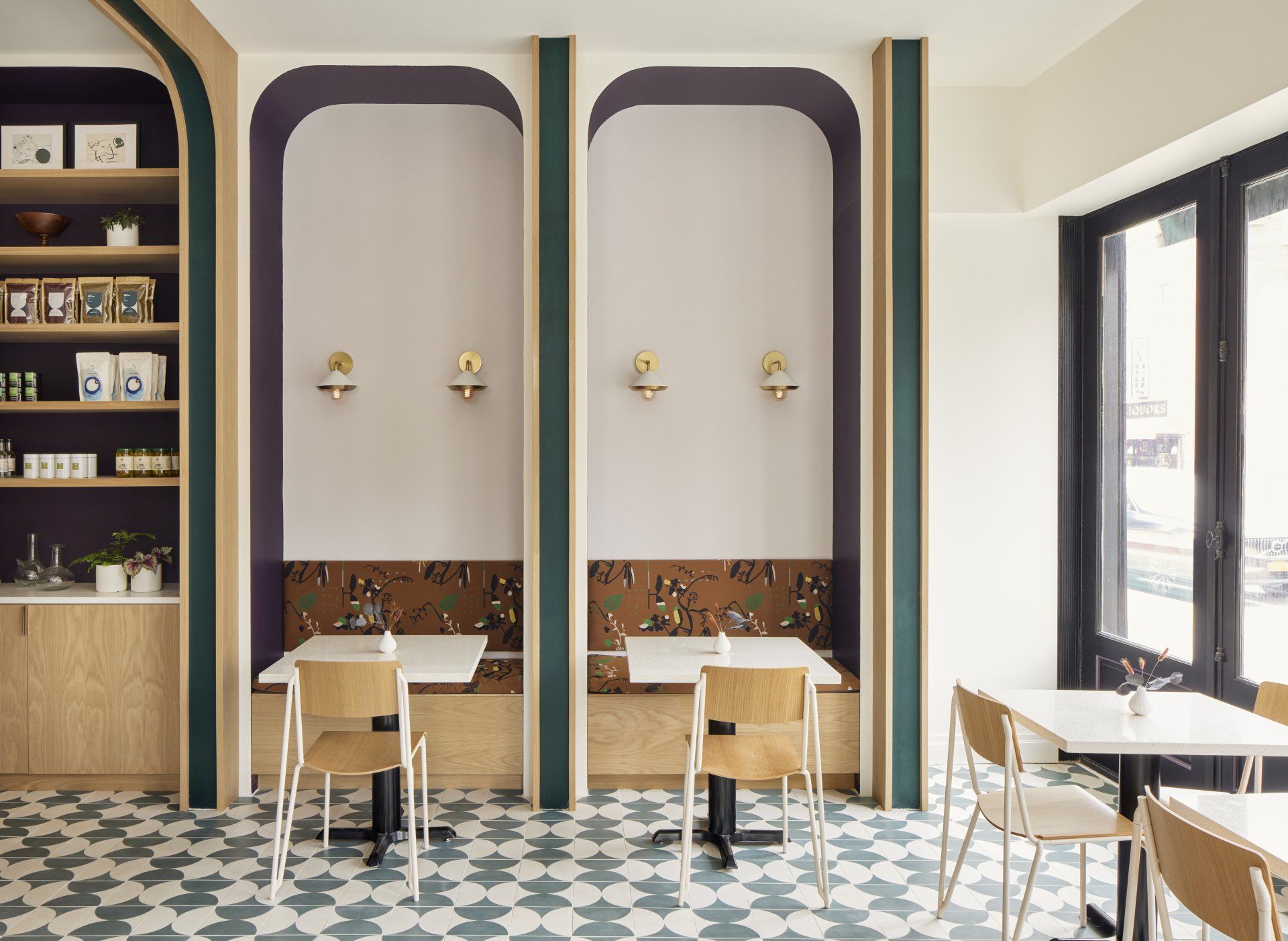
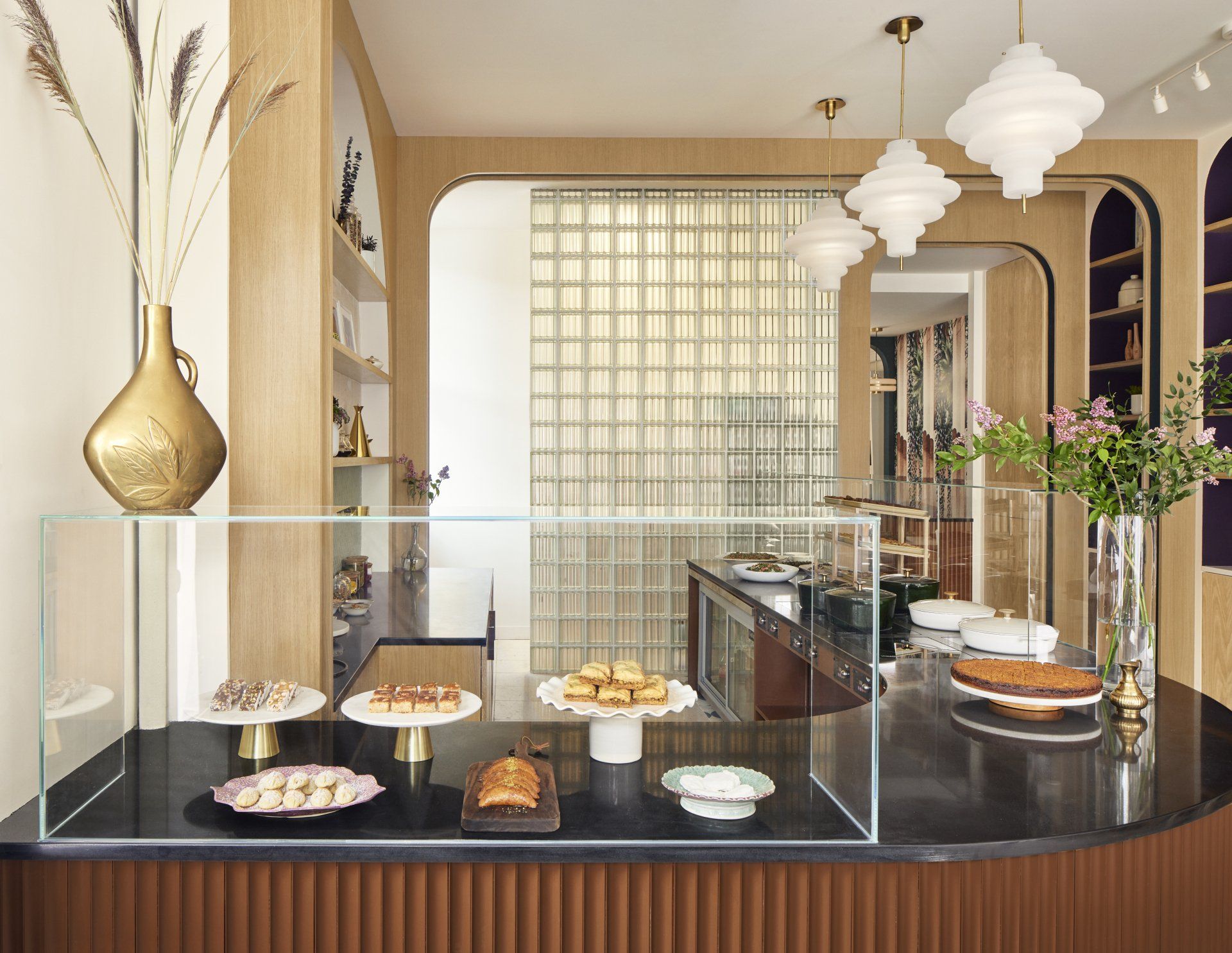
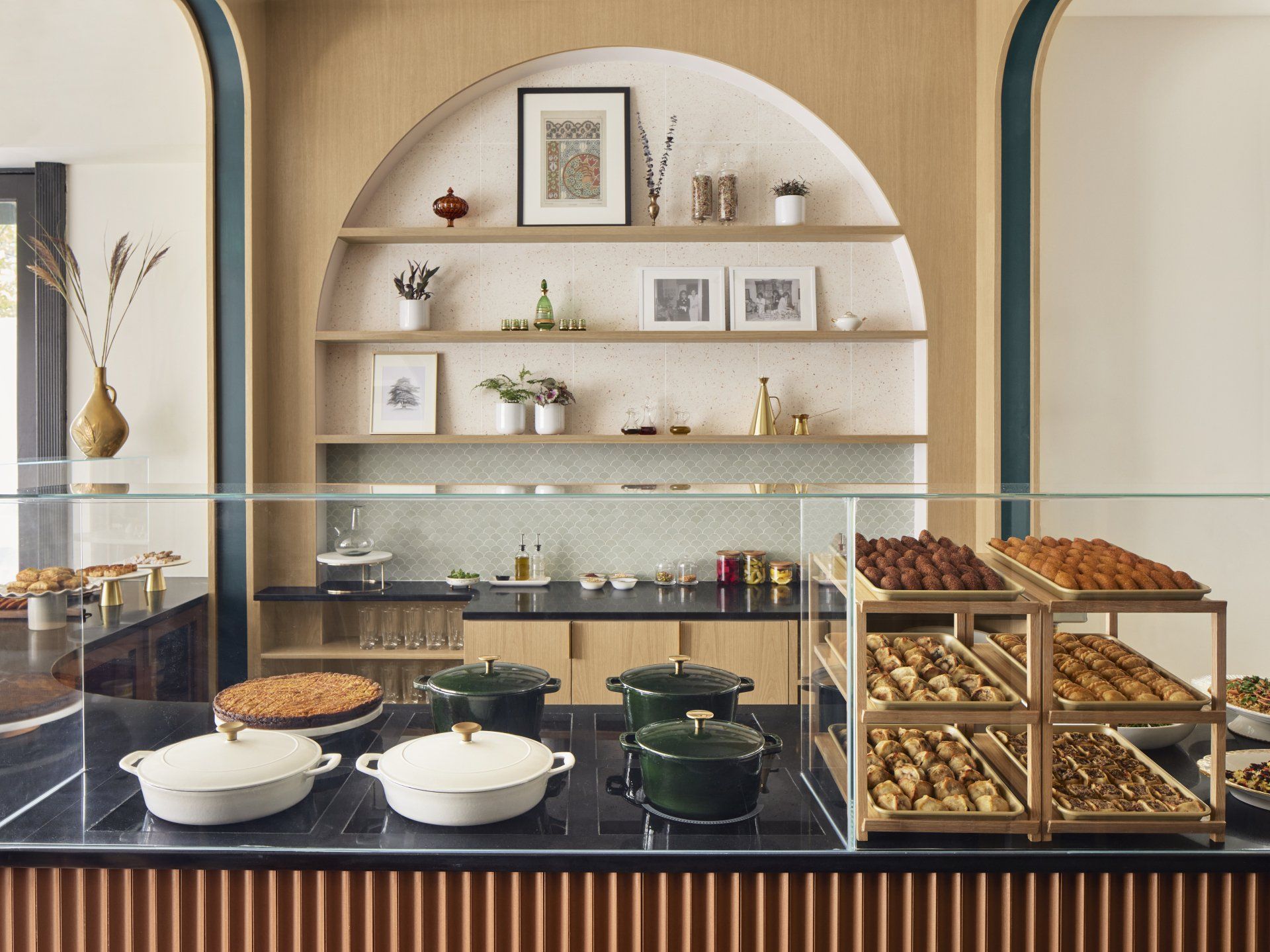
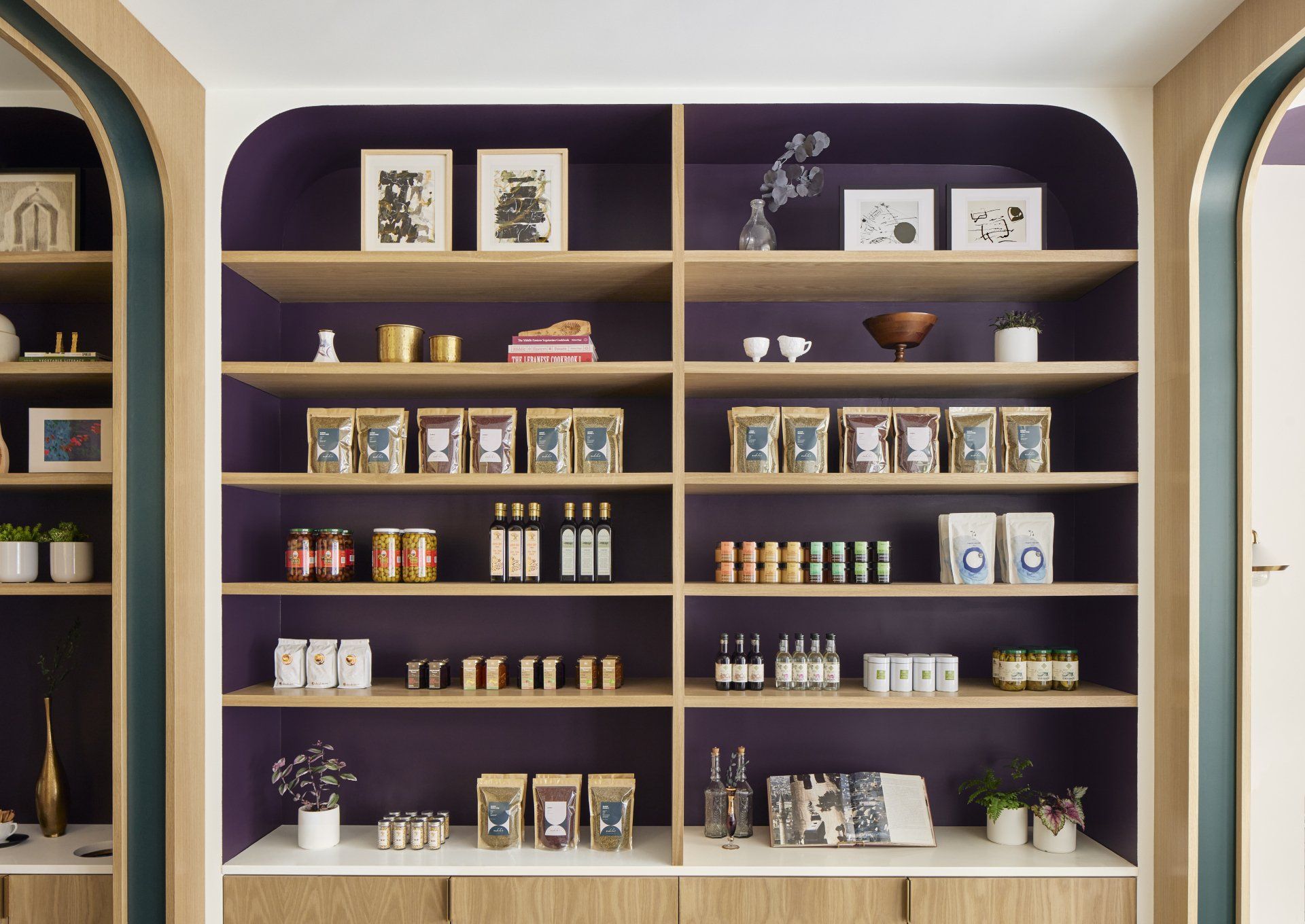
Just inside, a long, softly curving Caesarstone quartz counter arcs away from the entryway, drawing the eye through the long space and across a teal and cream tile floor designed by Iranian/French architect India Mahdavi. The counter is the heart of Nabila’s, where its signature, seasonal prepared dishes are displayed and staff interact with the community. Drawing loosely from Middle Eastern architectural motifs, its curving form also establishes a series of arches that organize the space and highlight different programs. Towards the storefront windows, two recessed arches create nooks containing plush booths for cafe seating; towards the rear of the counter, additional arches contain shelving to display specialty grocery items.
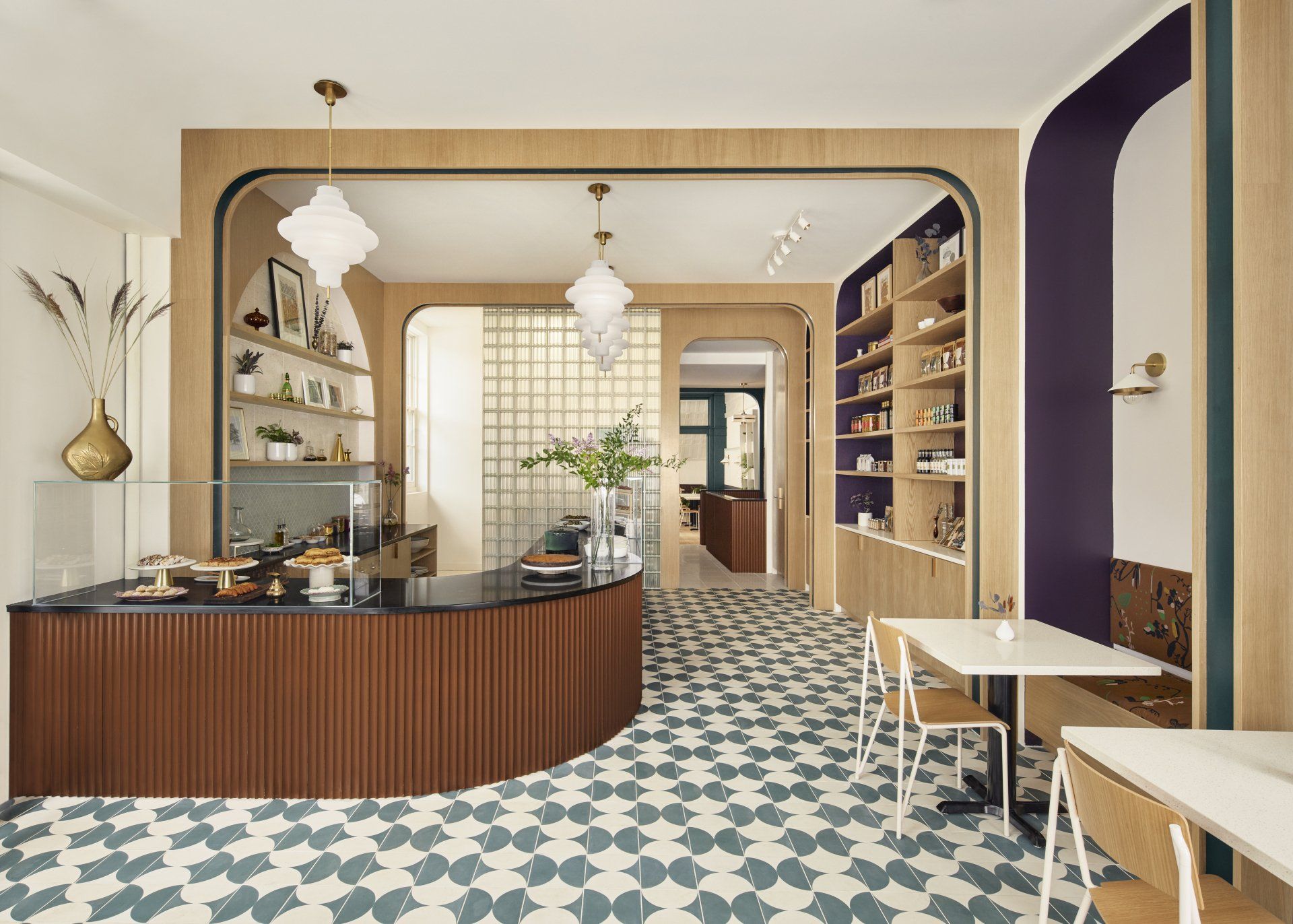
Throughout, lush finishes loosely recall Lebanese art, architecture, and foliage. Millwork is white oak with brass fixtures, booths are covered in an exuberant floral pattern by Hella Jongerius for Maharam, fishscale cement mosaic tile by Granada adds texture behind the counter, while Kelly Wearstler Tableau pendants in volcanic glass and brass drape above.
A color palette derived from vegetables found in the restaurant’s kitchen (eggplant purple, leafy greens), along with cream and pale lavender accents, complement these details.
“We were influenced by the intricate details and use of color in traditional Middle Eastern decorative arts and wanted to play with mixing textures and patterns of the wallpaper/tile and colors of paint."
Barbara Reyes, FTA’s Director of Interior Design and Branding
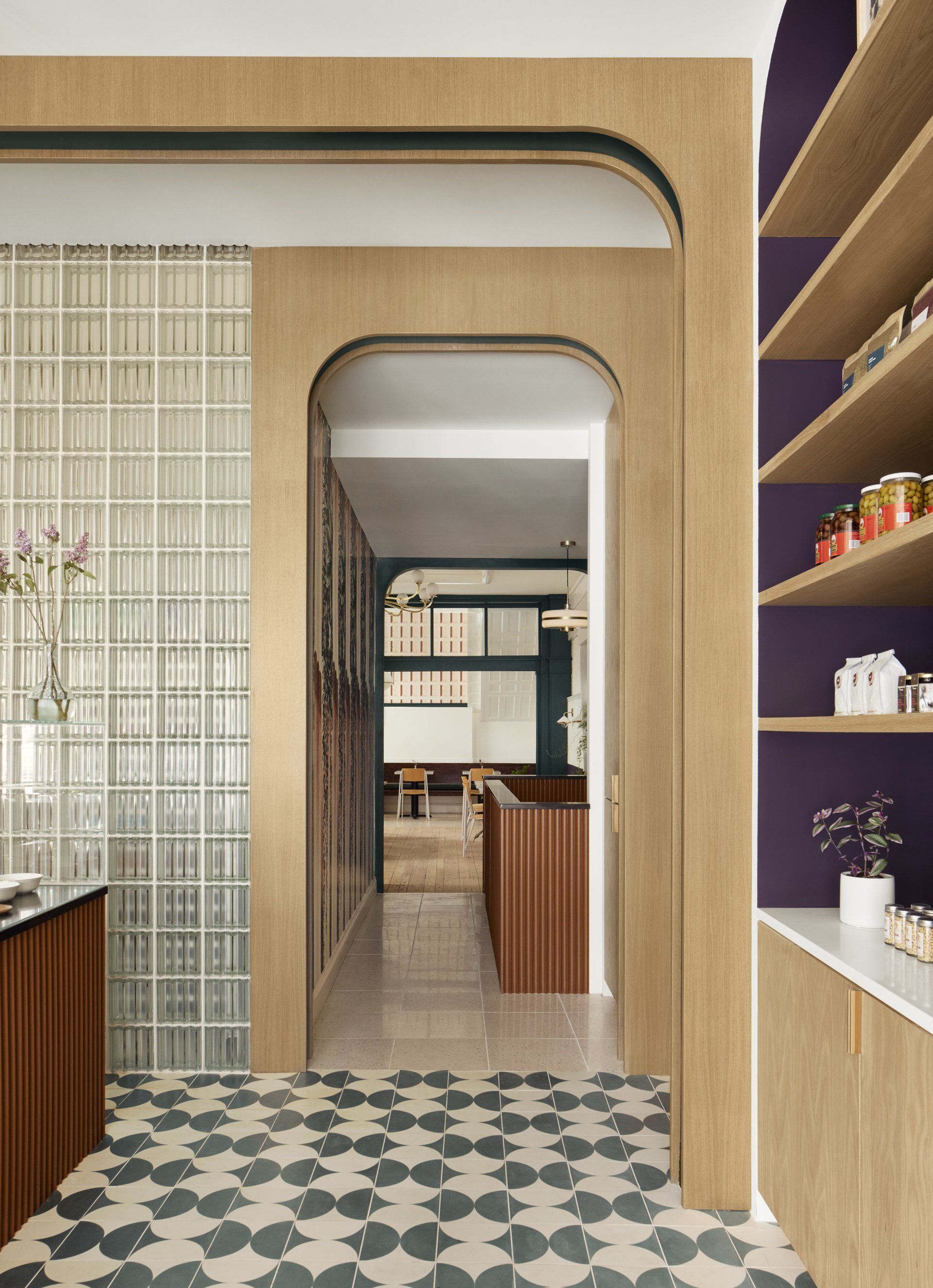
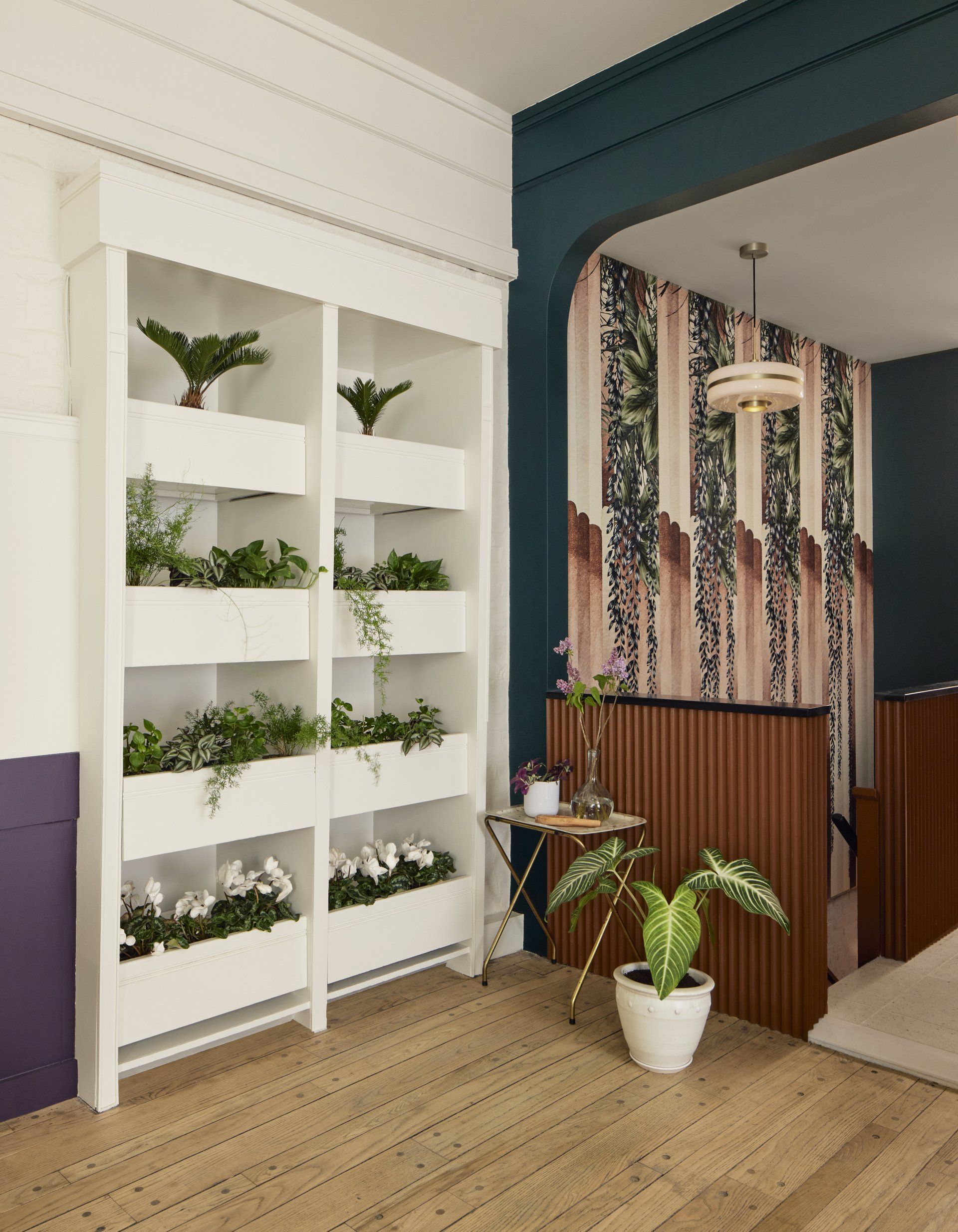
Integrally, FTA reorganized the original layout, moving the kitchen to the center of the overall space. Just beyond the front counter, the kitchen is now visible through a new glass block wall in a Doric Neutro pattern, whose texture nods to the counter’s signature fluting. This decision allowed for efficient segmentation, with the counter/cafe in front, kitchen in the middle, and additional seating and event space in the back. A hallway covered in a cascading vine wallpaper extends along one side of the kitchen, leading to the rear seating.
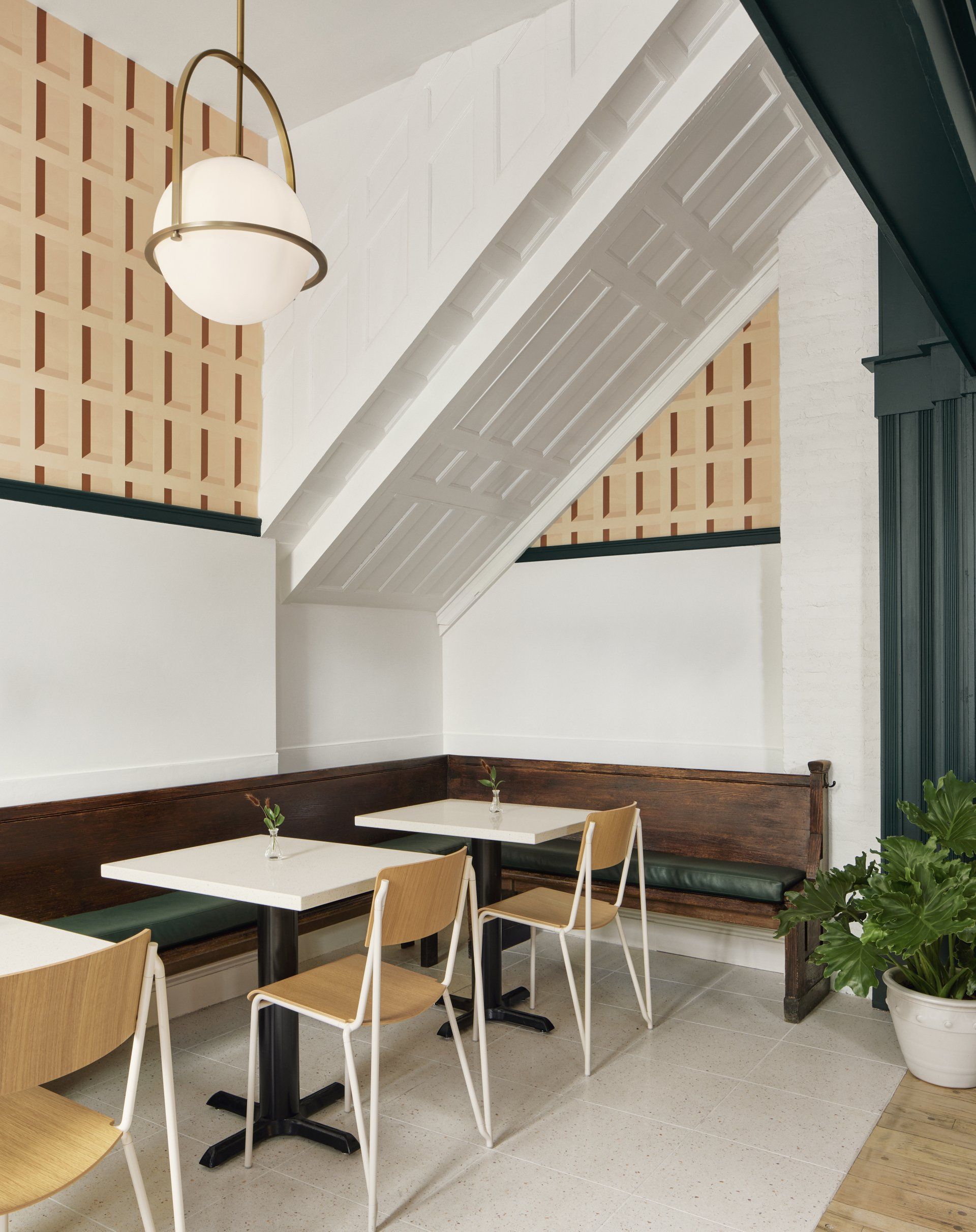
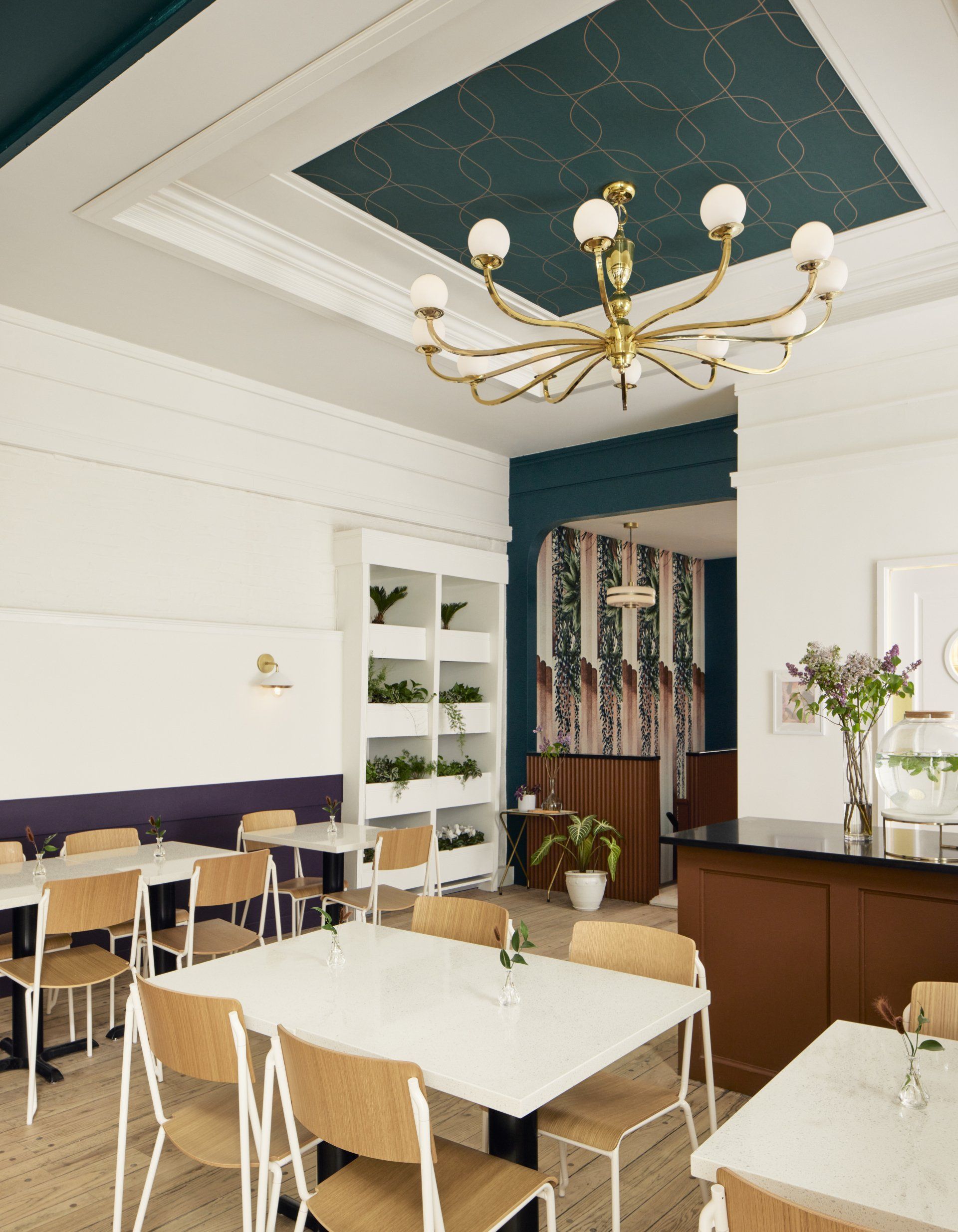
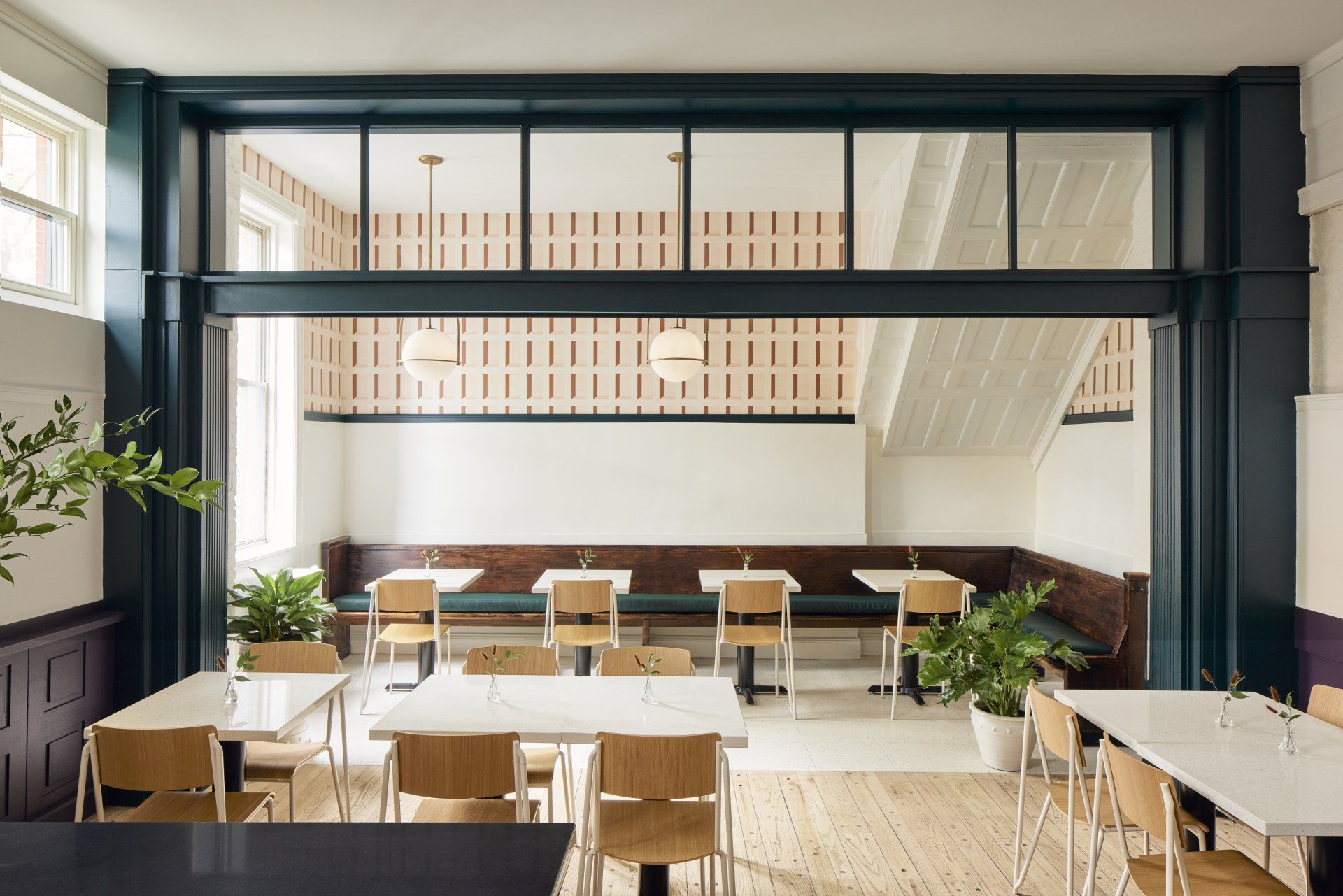
In the back, a wallpaper by Graham and Brown swathes the ceiling; its unique placement and swooping pattern reference the complex geometries of historic Lebanese decorative arts, in which patterns wrap not only walls but also ceilings. Suspended from the wallpaper, a large, existing antique chandelier is modernized with globe shades and a minimal base. Below, an antique wooden bench was adjusted to wrap two sides of the room, adding a warm, decidedly communal note. This space provides a fitting coda for Nabila’s, a restaurant established as a nourishing community gathering place. With ample seating, warm light, richly hued details, and a direct connection to the kitchen, it’s easy to imagine this room as the site of many lively neighborhood meals to come.
“Our favorite projects are ones with some historic contexts when we can create something that’s both old and new. We loved playing with some original details and inventing new ones that work with them. We were so thrilled when Mike chose this space as it was an exciting opportunity to design in a prominent corner building with beautiful light, and great bones.”
Address
248 Court St, Brooklyn, 11201 - NYC, USA
Interior Design
Frederick Tang Architecture
SHARE THIS
Contribute
G&G _ Magazine is always looking for the creative talents of stylists, designers, photographers and writers from around the globe.
Find us on
Latest News




Subscribe
Keep up to date with the latest trends!
Popular Posts