


Ferraz Apartment
The Brazilian studio Anne Motta Arquitetura de Interiores & Decoração introdyuced its latest project: a 205m² duplex in São Paulo’s Itaim Bibi designed for a Rio-based art collector. The residence balances the city’s dynamic rhythm with calm, creating a refined retreat to showcase an impressive art collection. The project blends fluid spaces, natural light, and custom millwork, with glass walls and ebonized wood enhancing harmony.
The client is a Carioca entrepreneur and, above all, a passionate about art and a discerning collector. While his primary residence in Rio serves as a sun-drenched refuge, where the blend of colonial and contemporary elements preserves family memories and reflects seaside daily life, the new São Paulo home demanded a different vocabulary: urban and introspective.
The apartment, newly delivered and completely empty, was a blank canvas. Floor-to-ceiling glass walls spanning the double-height ceilings bathed both levels in natural light and framed the city skyline in ever-changing layers and colors. This direct connection to the urban landscape became the starting point for a home that would capture São Paulo’s energy while maintaining a sense of refuge. To bring this vision to life, the entrepreneur entrusted the project to architect Anne Motta, founder of her eponymous studio. The brief was clear: integrated spaces, a neutral base, and a serene atmosphere, where black, white, and gray would form a sober frame that highlights the artwork—the sole bursts of color in the space. To realize this, Anne proposed a project guided by spatial continuity, where cabinetry, furniture, and materials play a crucial role in organizing flows and functions.
Upon exiting the elevator, visitors are immediately immersed in the residence’s atmosphere. The entry hall, far from conventional white, is clad in Tresuno, a material that mimics the texture of concrete cast in wooden forms, offering tactile comfort. The ceiling and walls share the same finish, while a recessed light line traces a subtle path. Burnished concrete flooring extends throughout the social areas, reinforcing the visual continuity.
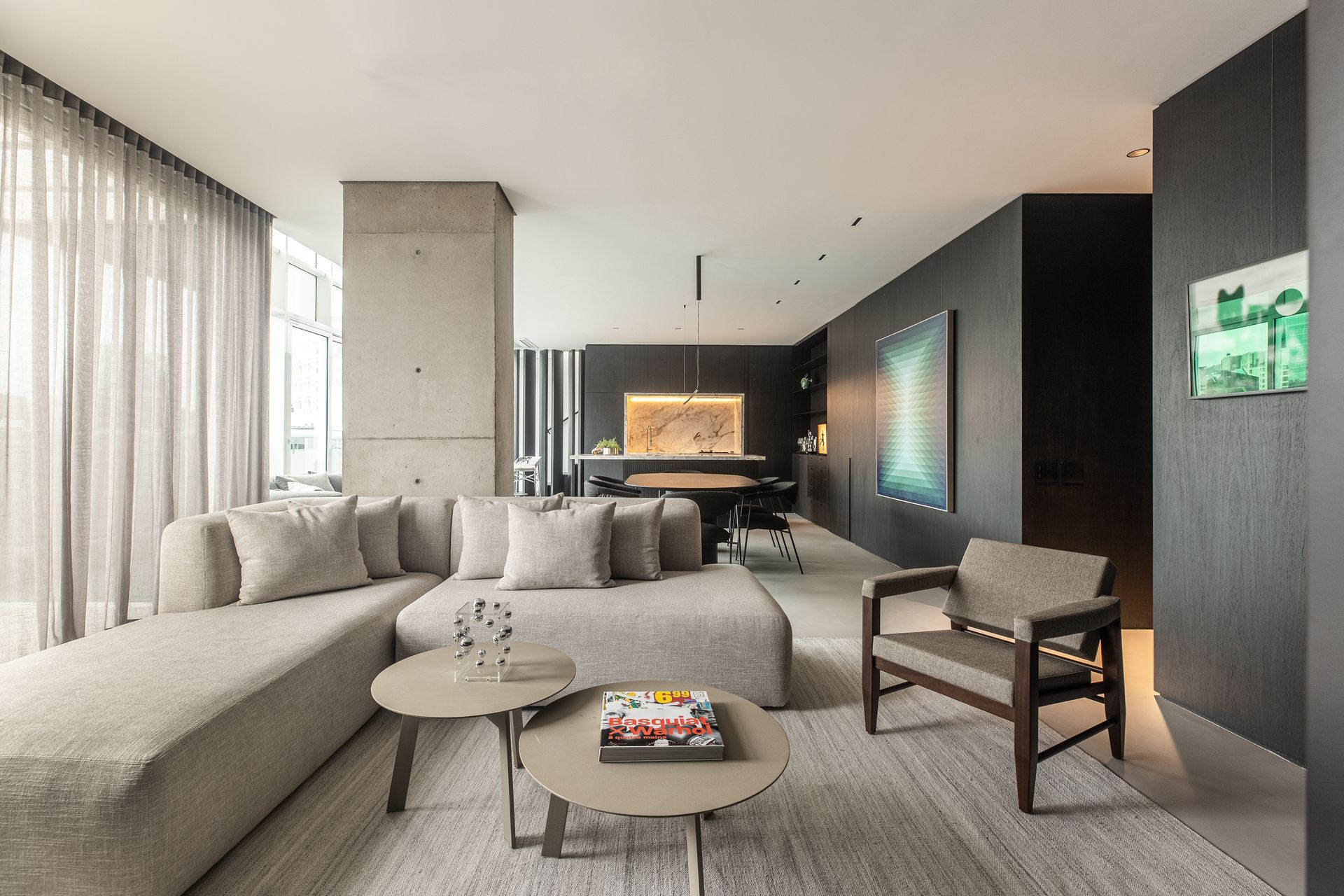
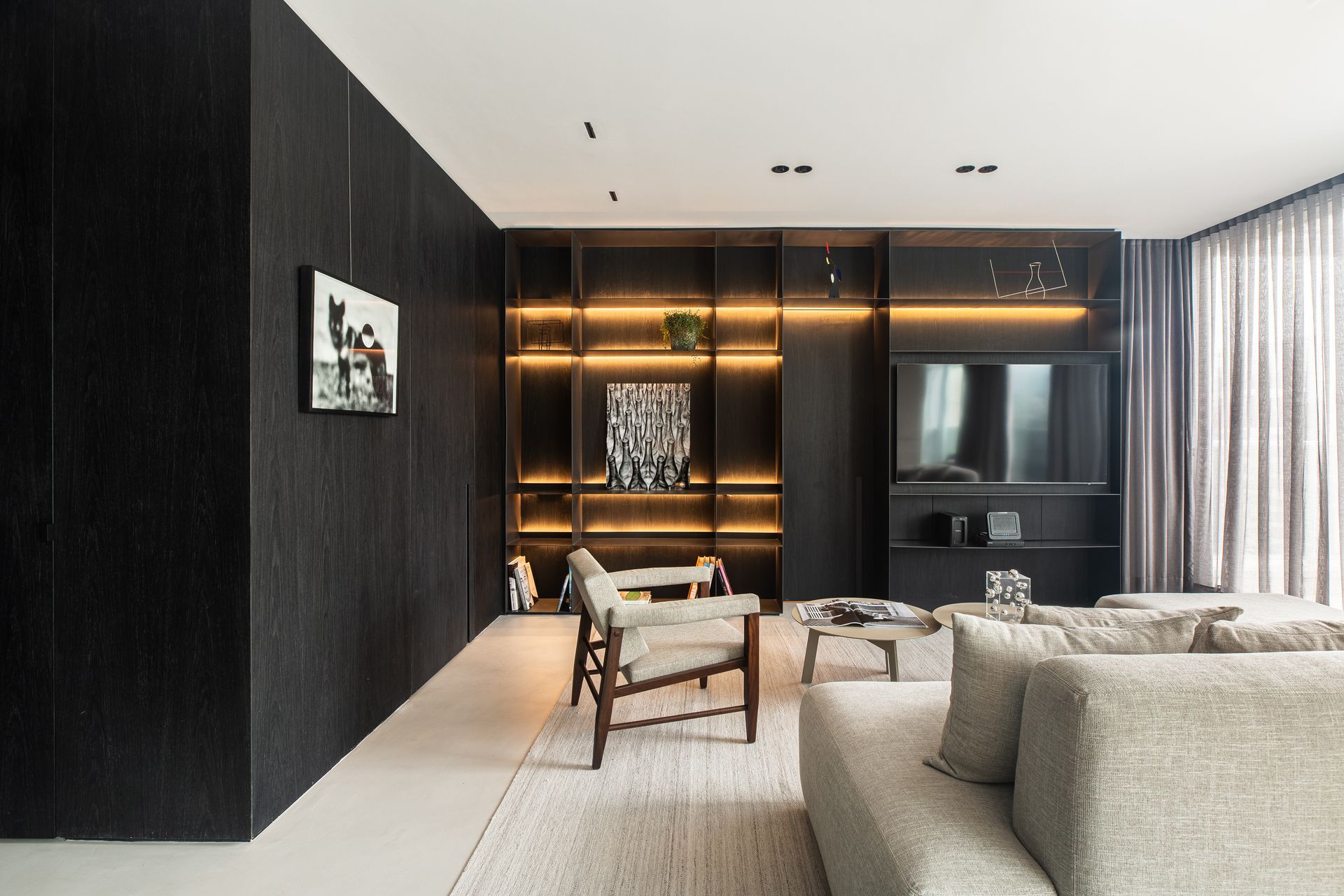
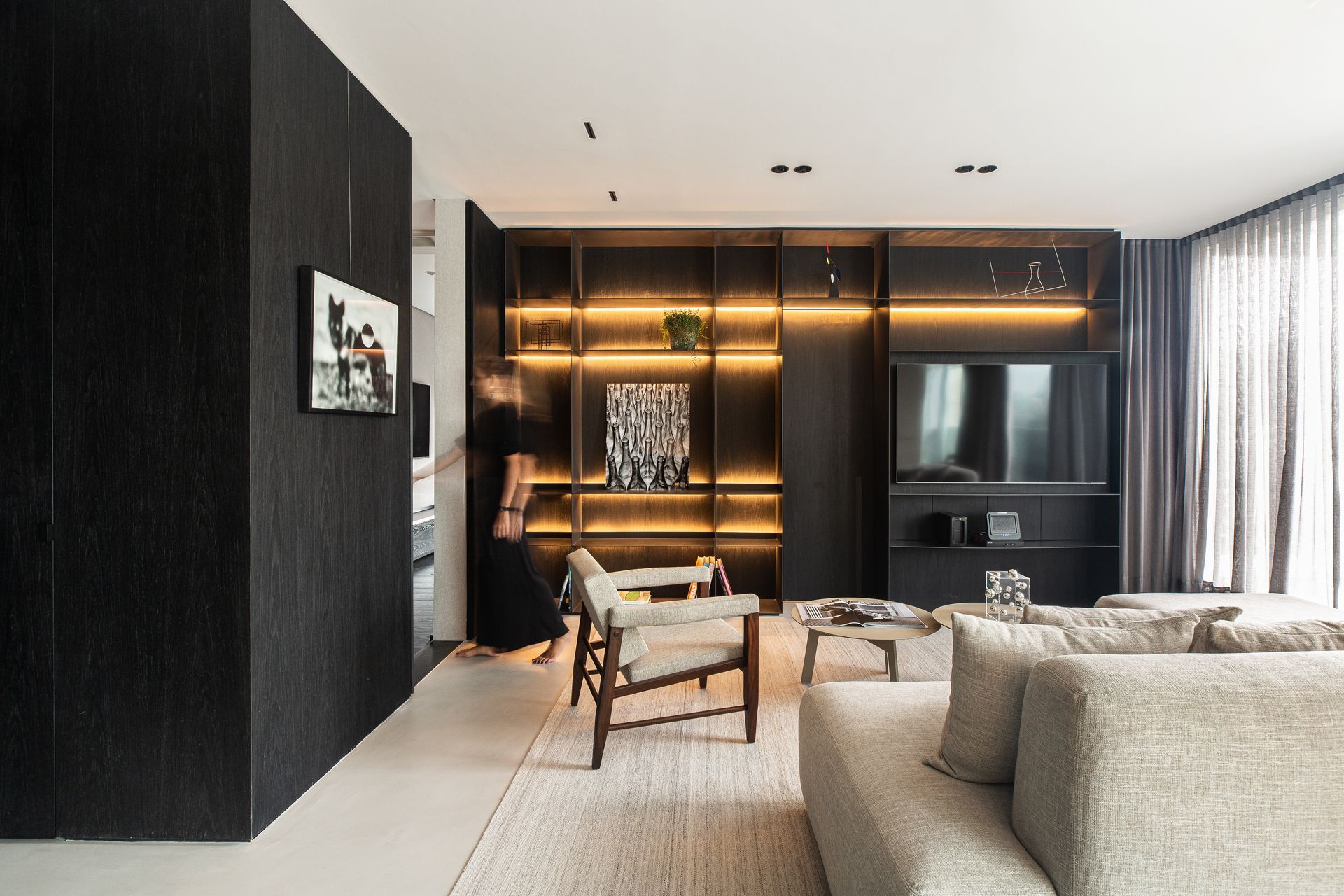
In the living area, the lounge, TV, dining, and kitchen zones merge into a single, naturally lit space. On one side, a large glazed façade connects the interior with the city; on the other, continuous ebonized wood panels line the walls, housing storage and seamlessly concealing doors to the powder room, laundry, and pantry. The millwork is meticulously crafted: joints and proportions create a uniform visual rhythm, while the deep, satin ebonized finish reinforces the cosmopolitan sobriety befitting a bachelor’s residence. At the far end of the living area, a slender steel shelving unit, offset slightly from the wall panels, supports the TV zone. Rear LED lighting casts a soft halo, highlighting the homeowner’s art collection and personal objects, including works by Raul Mourão (1967) and Alexander Calder (1898–1976). On the side wall, another painting completes the composition. At night, when only the shelving is illuminated, the space takes on the aura of a private gallery.
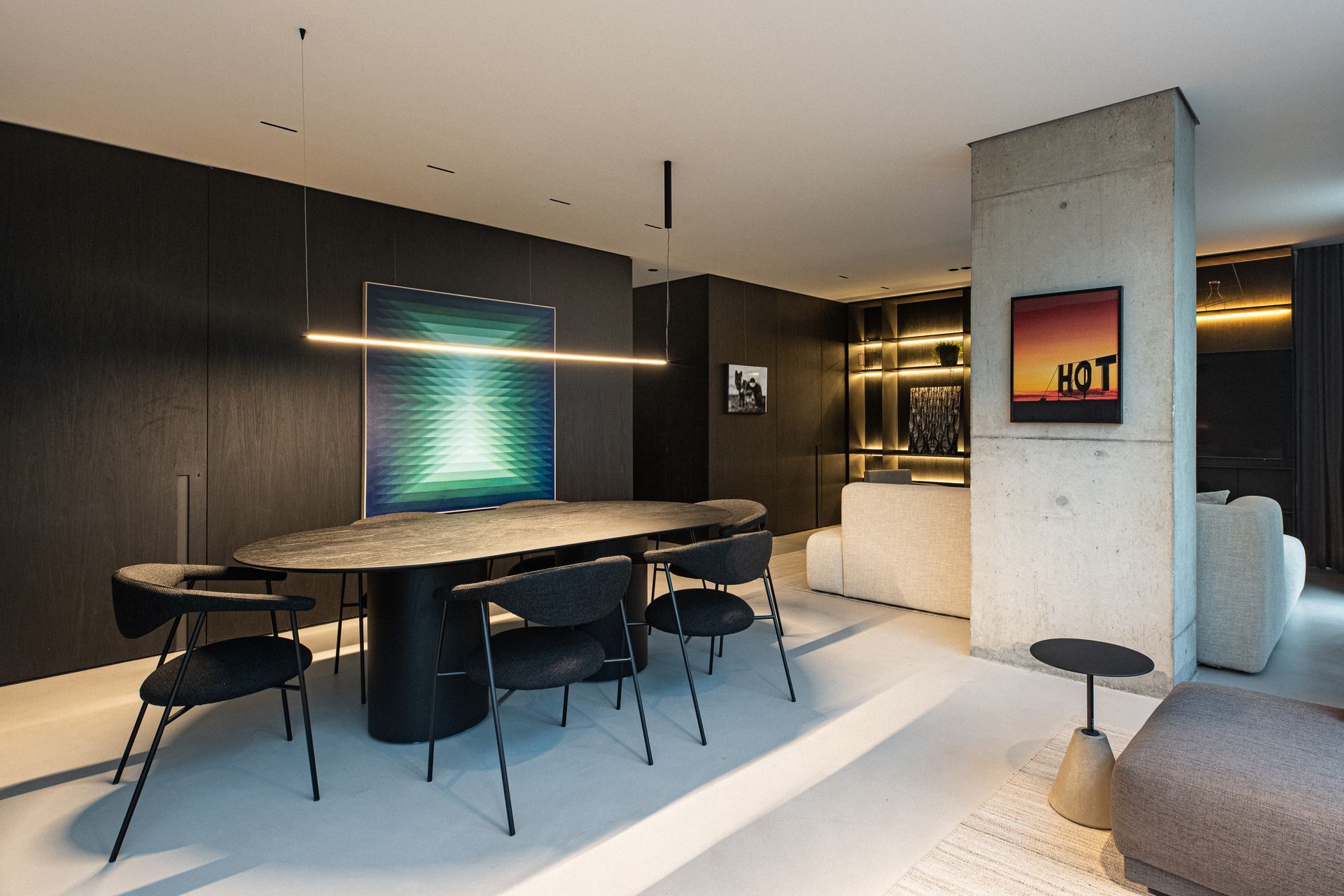
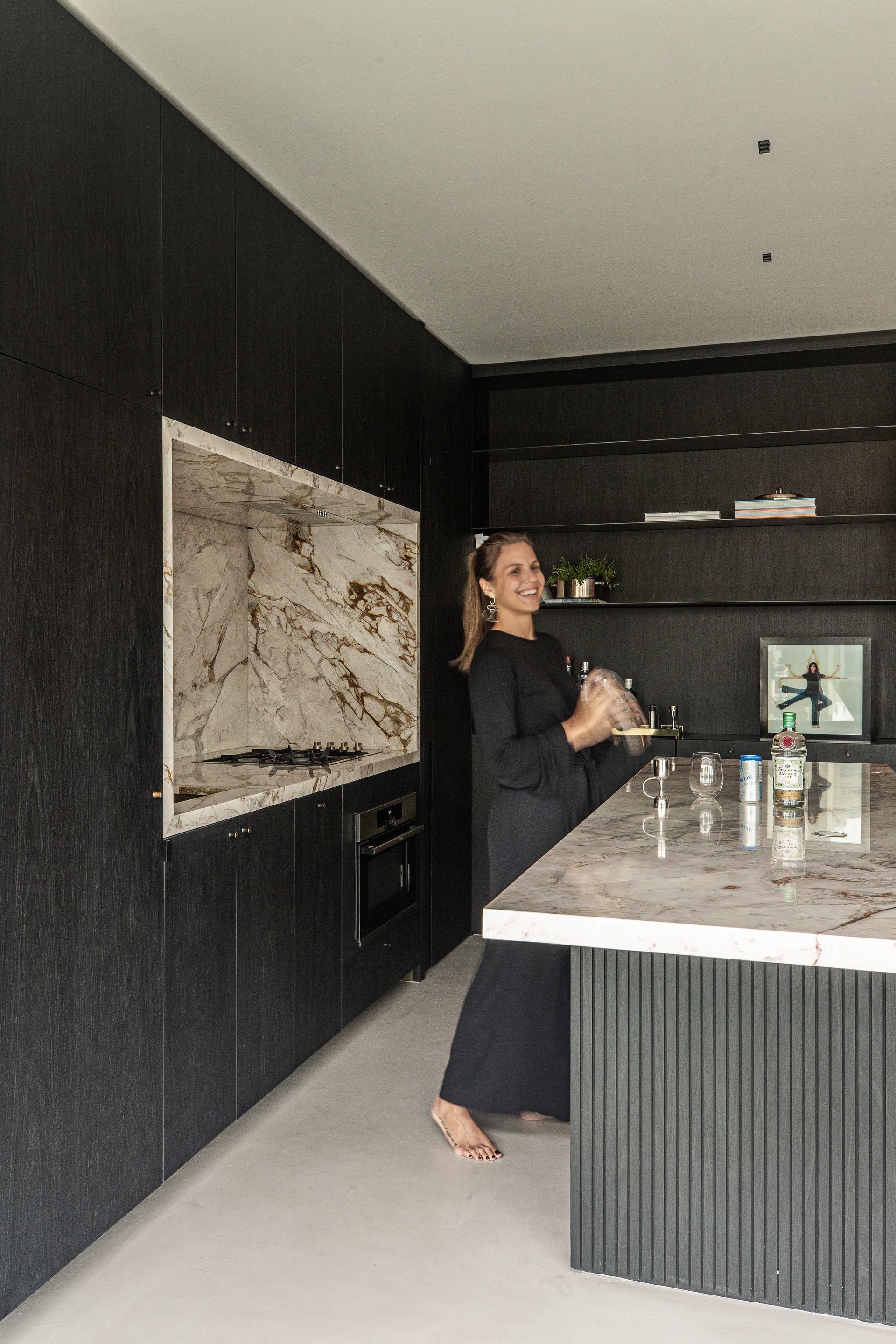
At the opposite end, the kitchen and dining areas harmonize seamlessly. In particular, in the dining area we find the Round table from Folio Living is surrounded by Curva chairs by Zanini de Zanine for 31 Mobiliário, with a linear pendant reinforcing the horizontal flow. On the wall, a painting by Daniel Mullen (1985), suspended by steel cables, injects color into the neutral palette. While the kitchen was designed as an extension of the social zone, suitable for family gatherings or business meetings. Wood panels extend to conceal access to support areas. Appliances (including refrigerator, wine cooler, oven and hood( are neatly integrated, maintaining visual continuity.
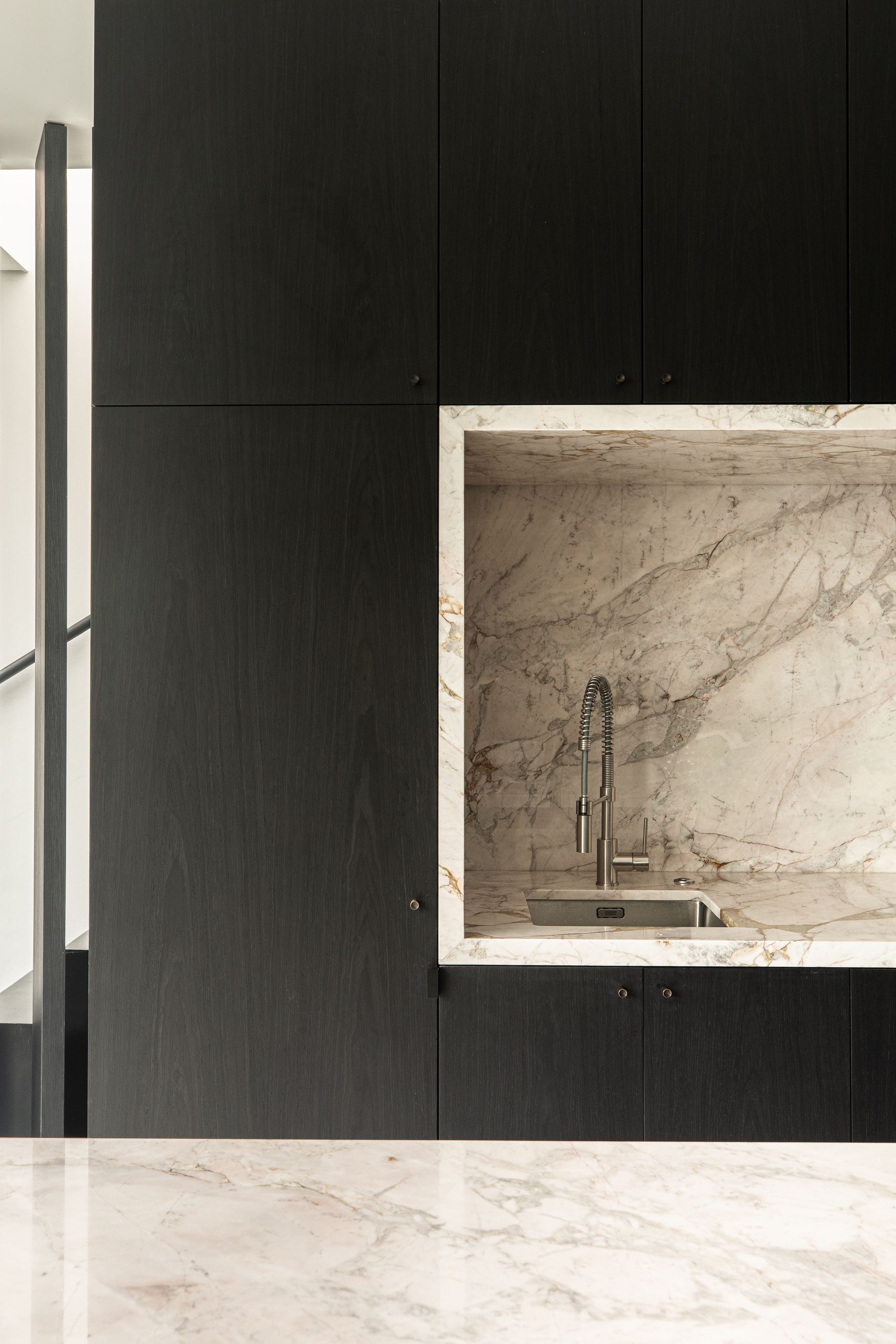
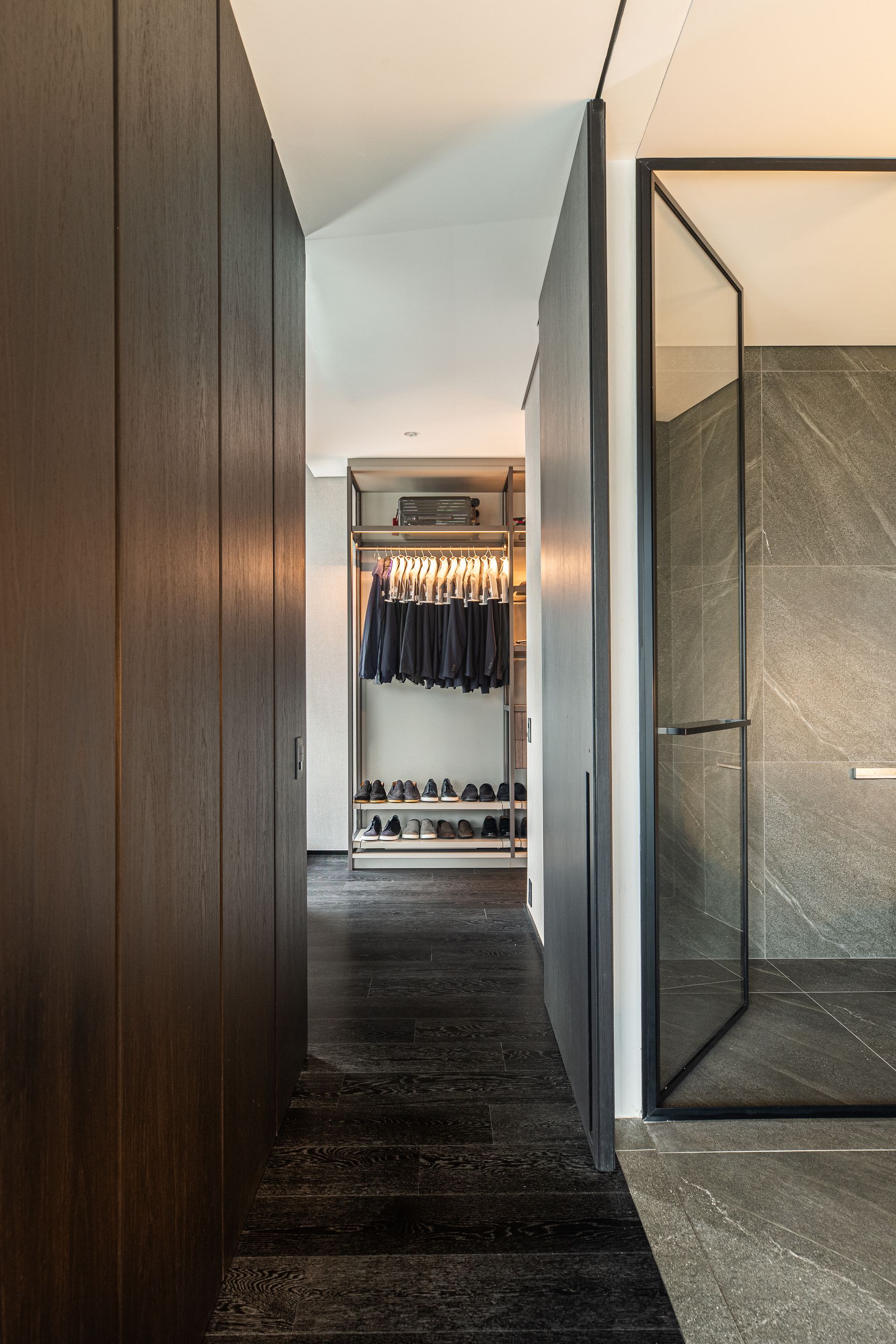
Upstairs, the master suite combines comfort and sobriety, evoking the understated sophistication of a boutique hotel. Here, the palette and materials are subtly inverted: while the lower floor paired dark walls with light flooring, the upper level features Neobambu ebonized oak floors contrasting with soft gray wallpaper. The floating graphite headboard extends to the bedside tables, creating visual continuity. Bedding in white and off-white softens the space, while a natural-texture rug enhances coziness. A panel, carefully positioned, redefines access to the bathroom, providing privacy without disrupting spatial flow.
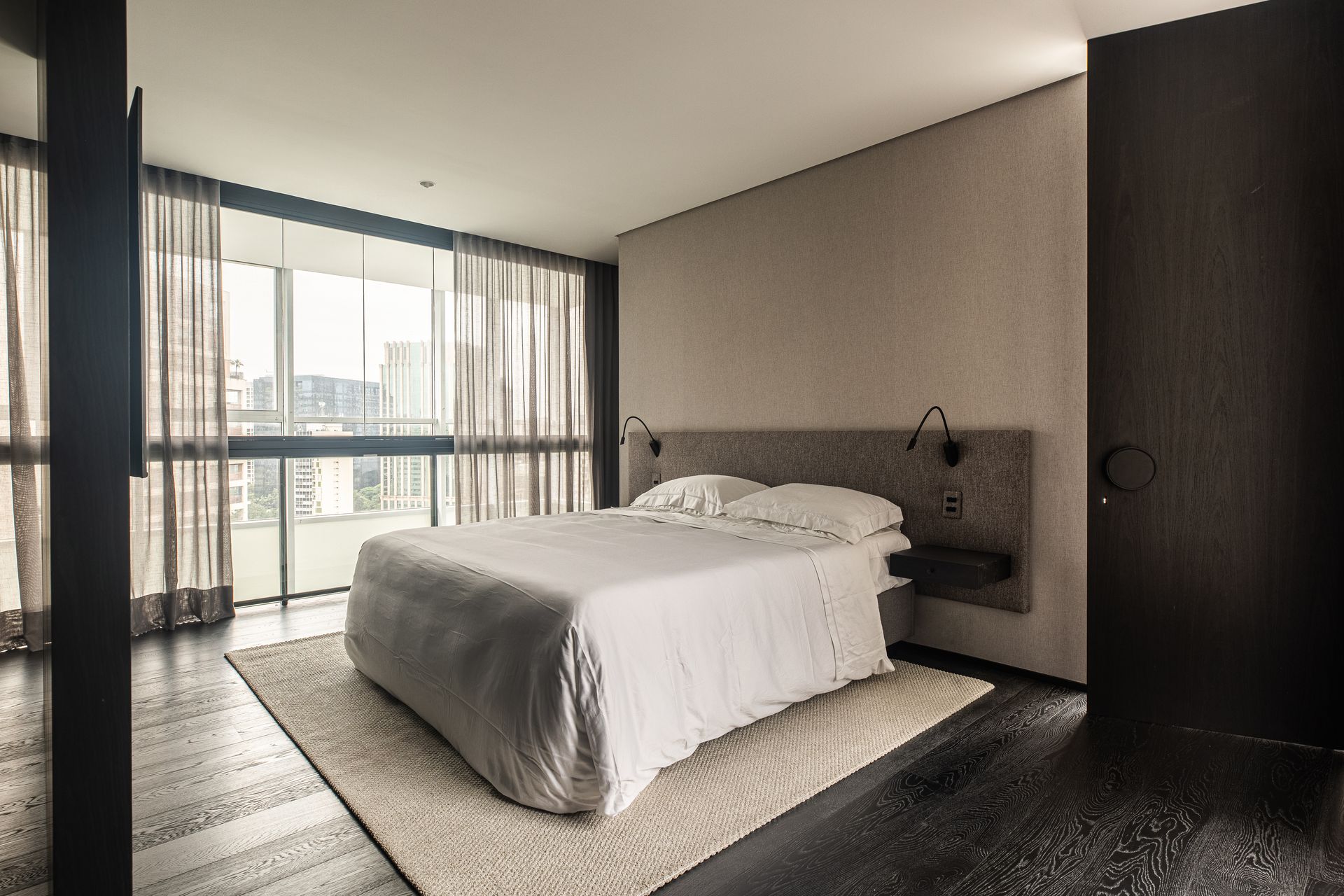
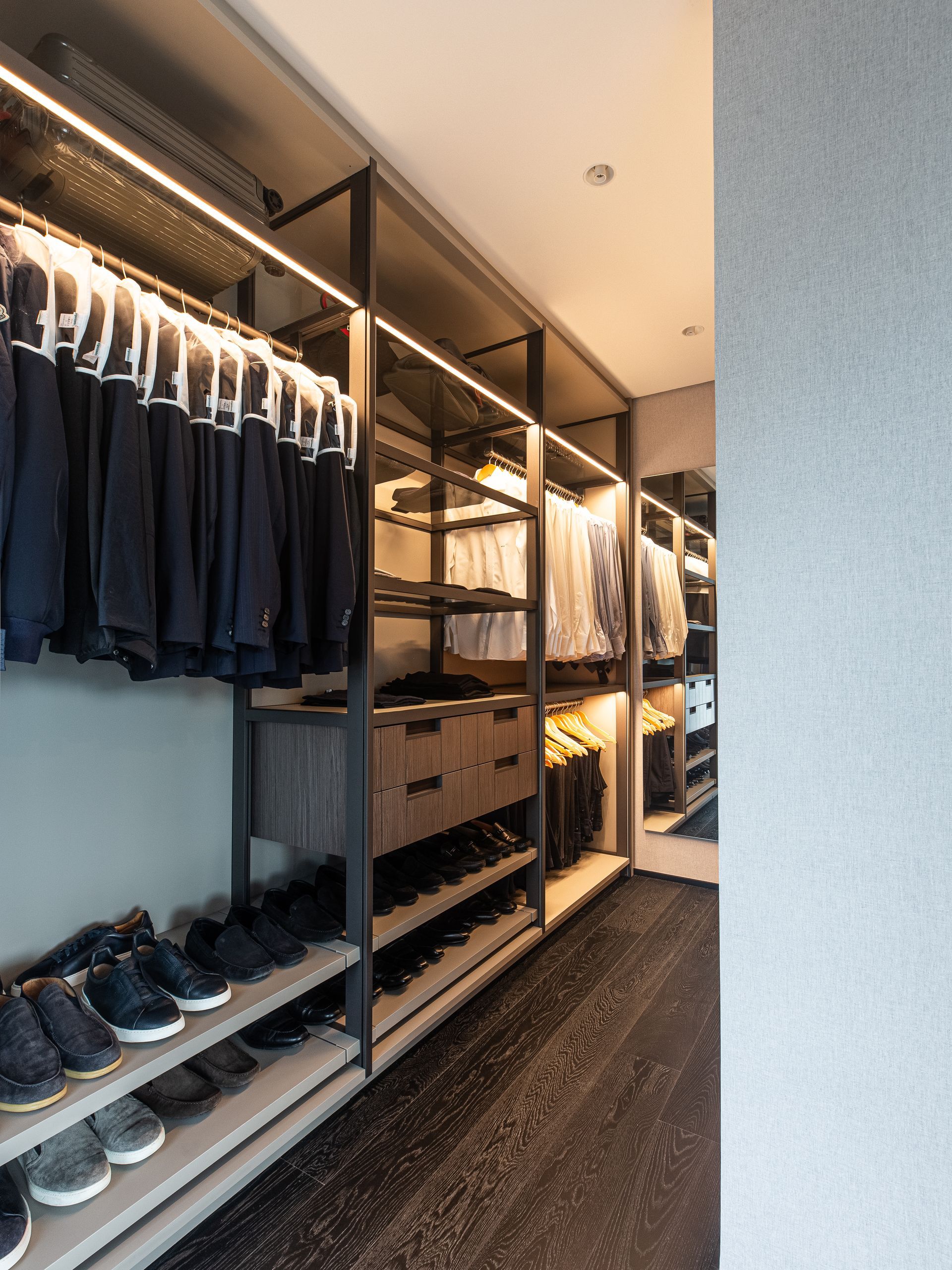
The open closet, with graphite metal structure and gray shelving, reinforces lightness and functionality. LED strip lighting highlights shelves and drawers, delicately accentuating volumes and materials. On the lower floor, two guest bedrooms welcome children and visitors. Access is via a door seamlessly integrated within the panels, ensuring privacy.
The master bathroom features a symmetrical layout and diffused lighting through stretched canvas, providing uniform, soft illumination. A central Carrara marble countertop is paired with an ebonized oak cabinet, black fixtures and a minimalist-framed shower enclosure. To the right, the shower benefits from filtered natural light; to the left, the toilet area.
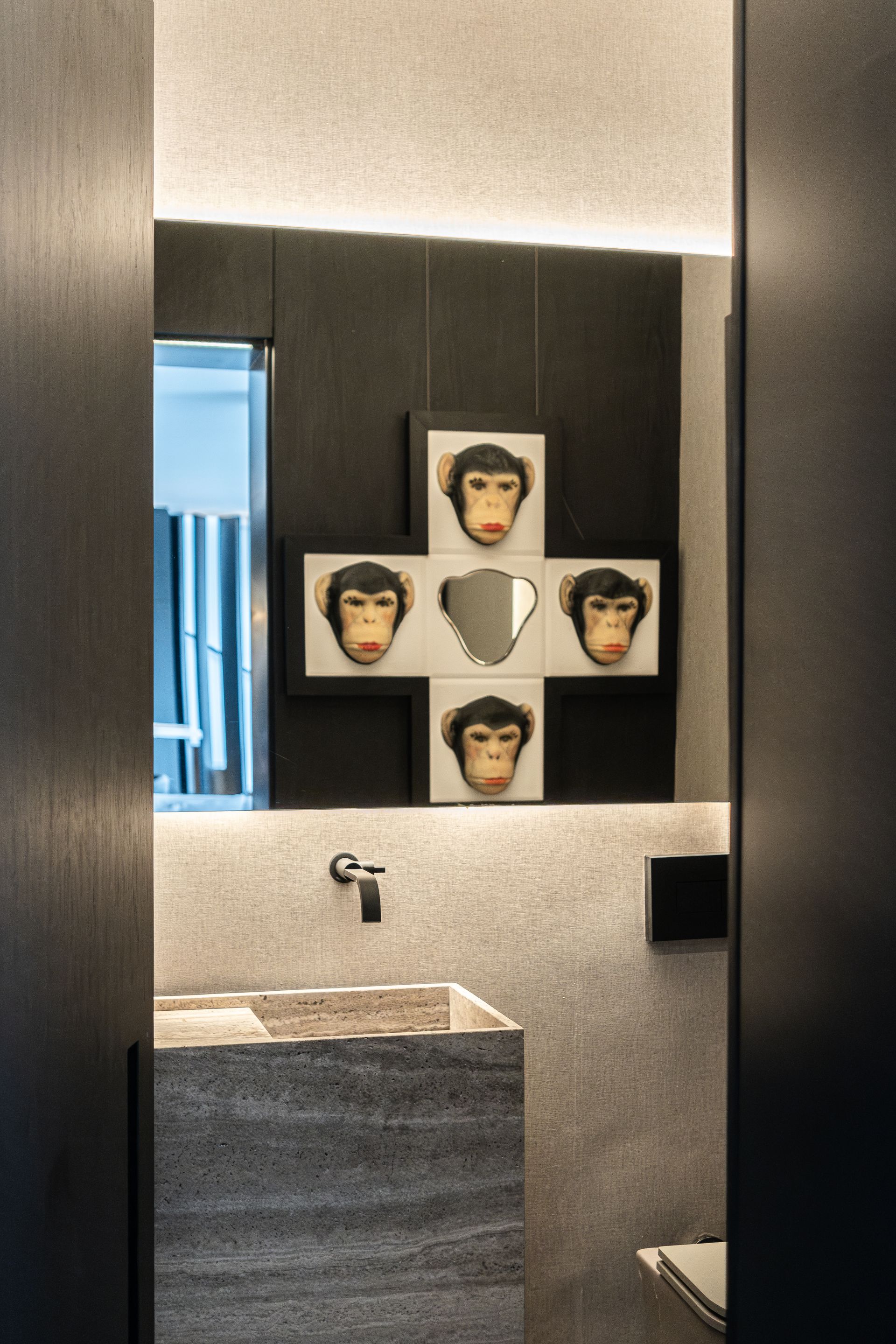
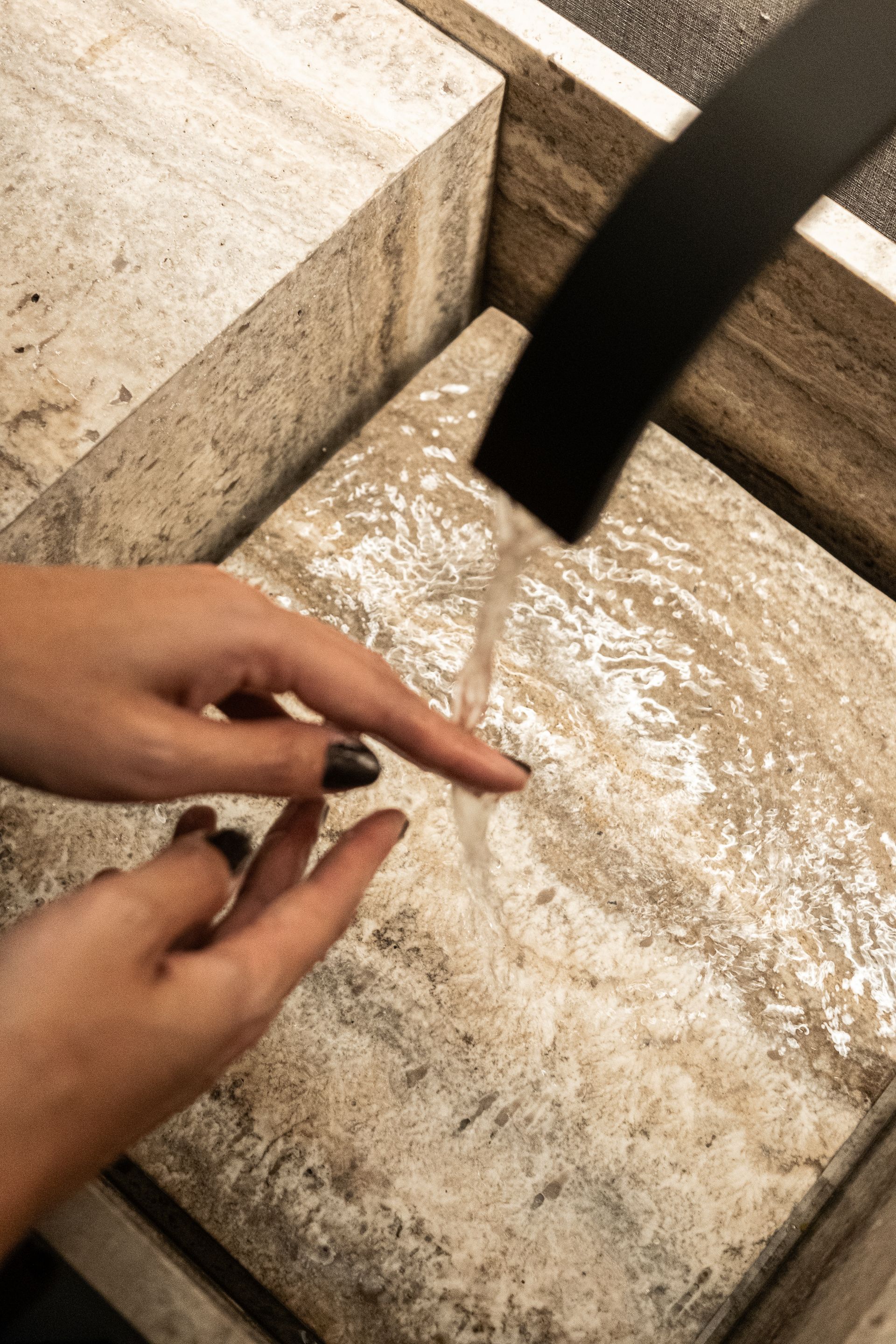
The powder room, discreetly integrated within the millwork, does not have a dividing wall; the panel itself serves as
the enclosure. Its walls are covered in fabric, and the gray travertine marble sink assumes a sculptural role. Indirect lighting emphasizes textures and creates an atmosphere of introspection, complemented by a work by Nelson Leirner.
Photography
Miti Sameshima
Interior Design
Anne Motta Arquitetura de Interiores & Decoração
SHARE THIS
Contribute
G&G _ Magazine is always looking for the creative talents of stylists, designers, photographers and writers from around the globe.
Find us on
Latest News

Subscribe
Keep up to date with the latest trends!
Popular Posts